A note before we begin: The purpose of this article is not to suggest that you should buy land. If you can afford the money and time, experiencing the world through travel, building something meaningful, or pursuing a new degree is far more rewarding. This is for all those for whom land is their “thing” — and for those who wish to protect their generational wealth, emotional and financial. If you ever decide to deal with land, our goal is simple: to see if we can take away a few risks and add a bit of experience to it. That's all.
We all know stories — some lived, some heard — about how land has been a great source of wealth for some and a great source of anxiety for others. Depending on which stories you have been overexposed to, your view of land is shaped accordingly: "nothing beats the return that land can give" or "I don't want to even come close to it."
While building TLB, I spent the last few years looking at both land documents and ownership issues, and I found this dichotomy of feelings around land intriguing. More so because you cannot wish away participating in land. Just like your surname, you inherit it — whether you like it or not — and then deal with it, either with love or with angst.
That is not the case with stocks or mutual funds. Not more than a small percentage of India deals in stocks, and the rest still do quite well. Now compare that to how many people you know who don't have to deal with any format of land — bought or inherited farmland, homes, apartments.
Then why do we know so little about land — its types, its documents? Dig deeper and you will hear: "Oh, it's very complex." But so what? There are so many complex things in our lives yet we feel adequate about them. Is land more complex than stocks and mutual funds? More complex than health insurance or life insurance? And if you flip the question — is stock investment safe? Is it easy to get money from a medical insurance claim? Is it easy to get a life insurance payout?
All of these involve documents, rules, and processes. None of them are simple. Yet millions participate in them — because they are familiar. We read about them. Friends discuss them. The media explains them. Over time, they stop feeling intimidating.
Land never got that familiarity. So we confuse unfamiliarity with complexity.
Myth 1: Land is not complex. It's just unfamiliar.
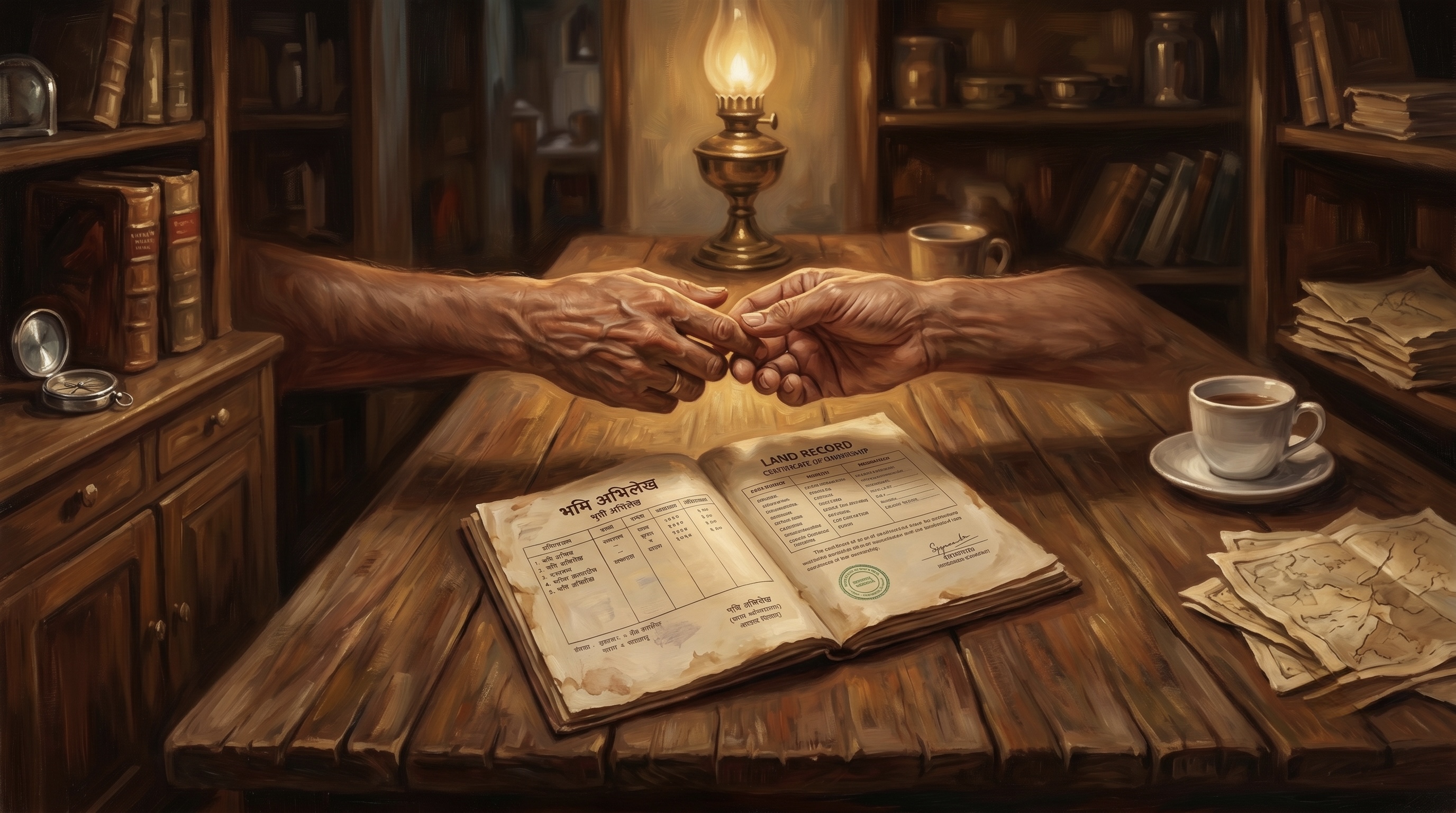
Land is not uniquely complex. It is simply a language most of us never learned.
Hindi sounds complicated to someone who grew up speaking Kannada. Kannada sounds impossible to someone from Delhi. But then you make a friend. And suddenly a Sharma says "Vanakkam". And a Kannadiga says "Bhai". That is the magic of familiarity.
Land works the same way. Once you understand the basic documents, the types of land, and the systems around it, it stops feeling mysterious. Not easy. But manageable. Just like everything else in life.
Most Indians will eventually deal with land in some form — a house, an apartment, farmland, inherited property. And yet most of us know almost nothing about it.
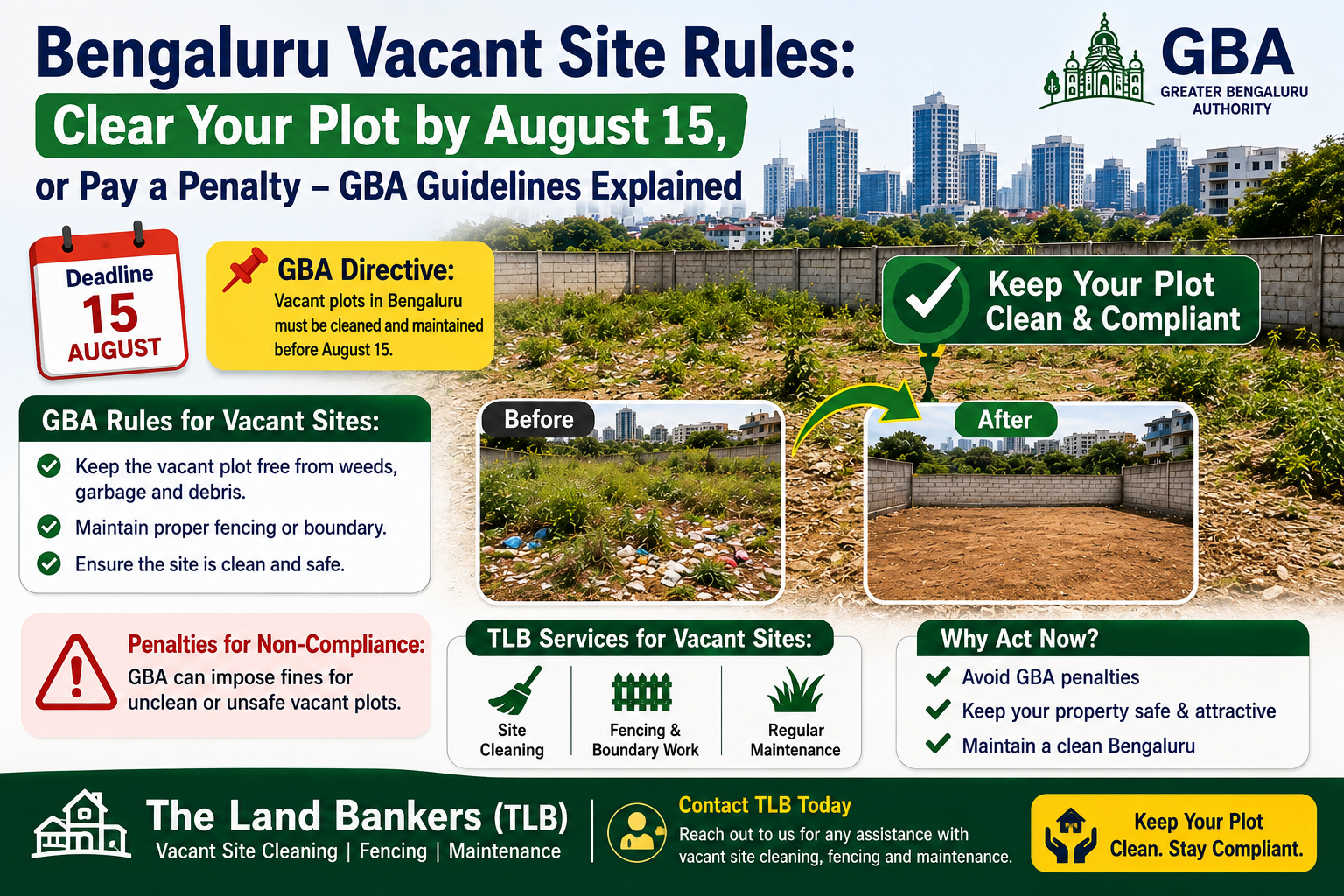
At TLB, this is what we are trying to do. Make land familiar. Help people understand the documents behind their property. Help them manage what they own. Help them buy or sell when they decide to. Not push people toward land — just remove some of the fog around it.
Because when the fog clears, people make better decisions.
Myth 2: Trust the checklist. Not the person.
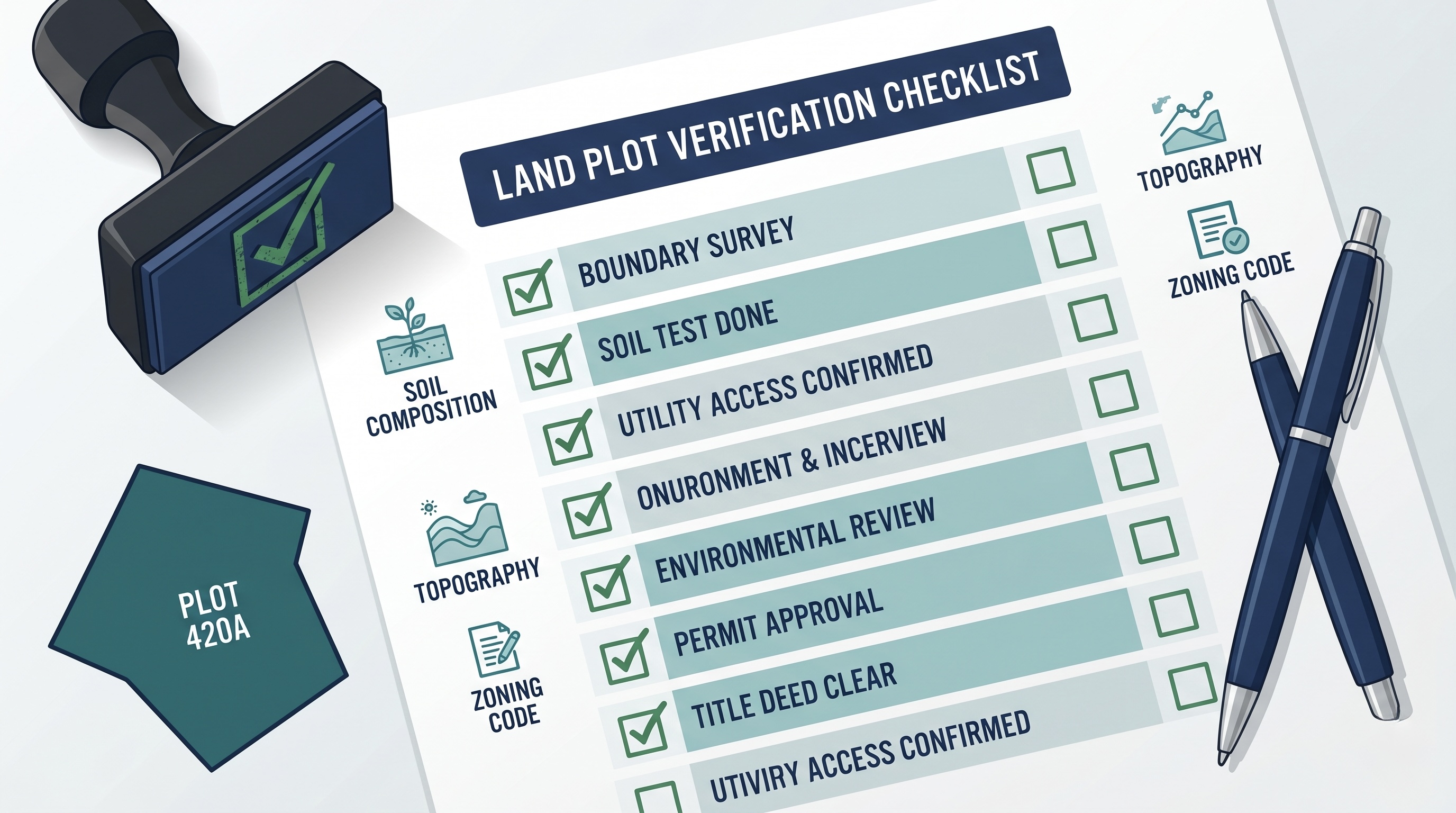
Common man: land is so complex. Banks: Home Loan Mela.
Two people looking at the same land. Very different levels of confidence.
Think about it. Banks lend thousands of crores in home loans and plot loans. They run a home loan mela in every city. They aggressively chase customers. And yet most of us don't even know which documents together tell us that our land is safe. Even more surprising: the bank manager lending crores is on a rotation job and barely understands the place or the people. How?
Banks don't rely on genius. They rely on process.
Yes — boring process work. Day in, day out. Document verification. Owner verification. Area verification. Physical inspection. The same checks, the same order, every single time. Nothing glamorous. No shortcuts.
Banks don't need to understand every village. They just run the same checklist everywhere. In bank language: "In gods we trust. Everyone at the bank must run the checklist."
You and I differ from banks in two ways. One — we don't know the checklist. Two — even if we find it, we rarely have the time or discipline to run it properly.
This realisation — land becomes manageable the moment someone runs the right process — led us to build TLB. If banks can lend thousands of crores against land using nothing more than a disciplined process, maybe land isn't as difficult as we think. Maybe we just never had access to the process.
At TLB, we are trying to make bank-grade verification accessible to ordinary landowners — even when you don't need a loan. So you can see for yourself what's good and what's missing.
Trust the checklist. Not the person.
Myth 3: Only insiders understand land.
Ask anyone and they have a pet story — how their uncle got lucky buying land cheap due to connections with officials, or how their neighbour got scammed because he didn't listen to his father. As if there is a secret cult whose blessing is a must if you want to succeed in land deals.
And slowly a belief sets in: land is only for insiders.
The worst part? This unfamiliarity with land documents shuts us off from what is actually available. Online. Free of cost. At the Tehsil. At the Sub-Registrar Office. For a very small fee.
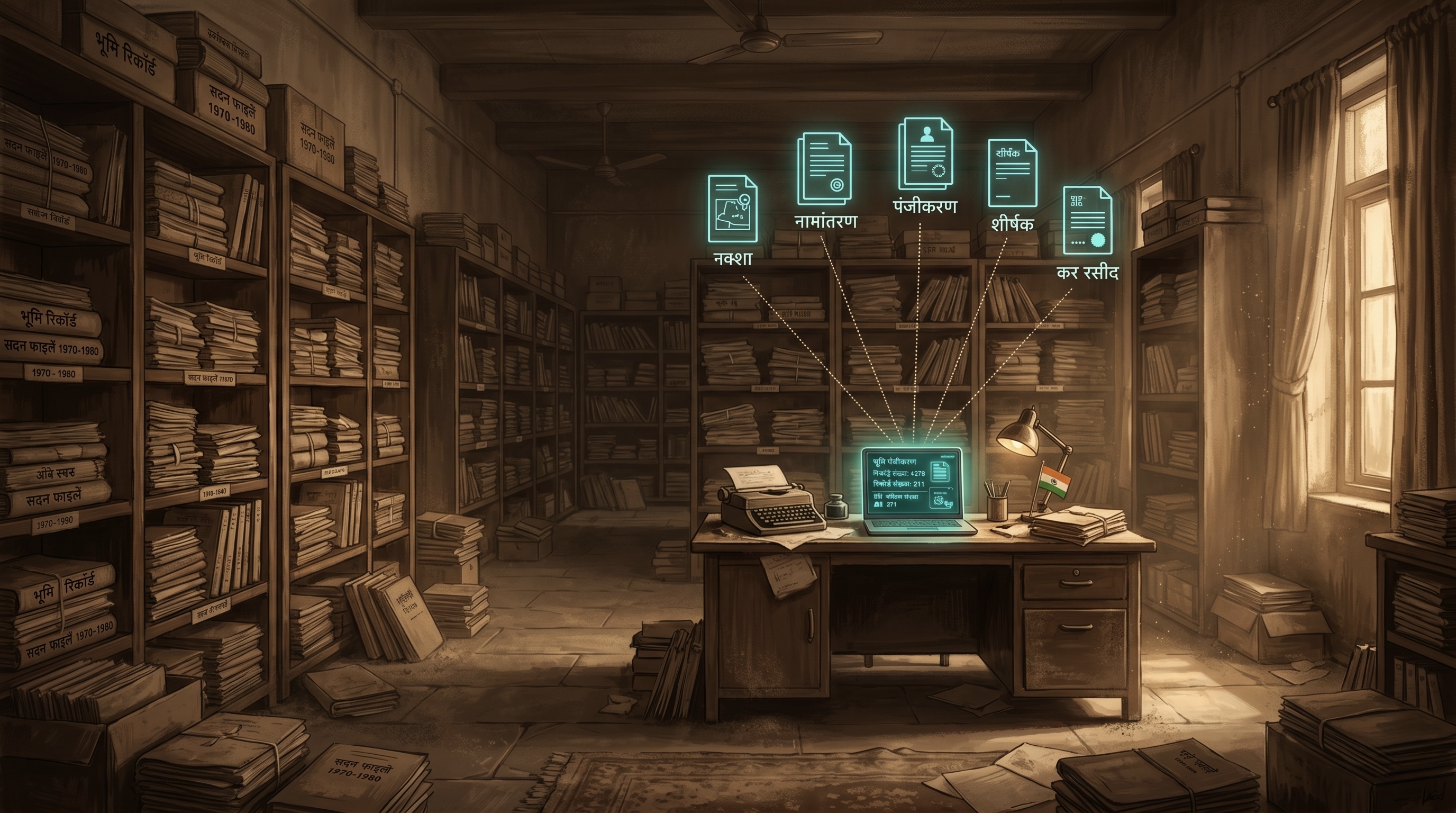
Land documents are not a secret. They are just scattered. Across offices. Across systems. Across time.
Collecting them from different places is exhausting. So the person who manages to assemble these documents for you — even though they are publicly available — starts to feel magical. That is how the "insider" myth slowly gets created.
Imagine you are inside India's largest library with over a million books — every book you could ever want — with just one problem. No index. You would have to go through every single book to find the one you need. This is exactly how land documents feel. Public, yet inaccessible.
Once you see it this way, the mystery disappears. No secret knowledge. No insider information.
It is simply boring, laborious work: collect scattered documents across systems and make sense of them together. Run a checklist. Get some online. Get some from government offices. Put them together.
That is all there is to the so-called "magic".
The owner rarely has the time or skill to do this. So they do it only when they cannot avoid it — at the time of selling. If a single document is missing, it can push your sale timeline by three months.
Avoidable. If someone looked at the documents early and fixed what could be fixed.
Fix early. Check often.
Myth 4: A land record reflects reality.
Most of us have heard the urban legend of land being sold twice — the famous "double sale". Or the Khosla ka Ghosla scenario: one owner claiming land by document A while another claims it by document B. How is that even possible?
Land records do reflect reality. But not individually. They reflect reality only when read together.
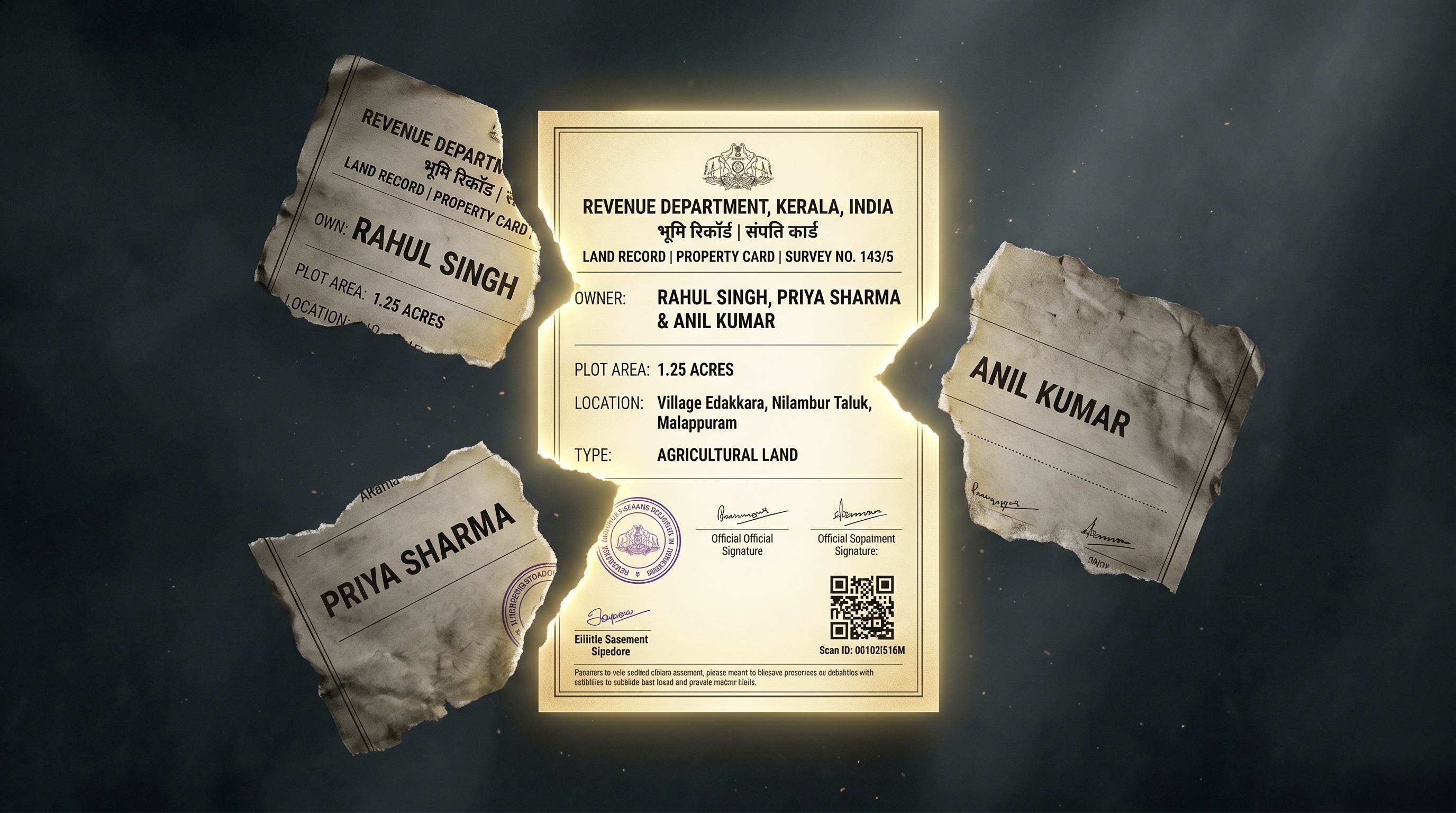
Consider this. Owner 1 sells land to Owner 2 via a sale deed registered at the Sub-Registrar Office. So by SRO records, Owner 2 is the latest owner. But the sale never reaches the Tehsil. So by Tehsil records, Owner 1 is still the owner. The Survey Department's record may not have changed since the last settlement — it still shows Owner 3.
Three different documents. Three different names. Same land. No one is wrong. Everyone is simply reflecting a different reality at a different point in time. They are just not in sync.
This is like the story of blind men describing an elephant. One touches the trunk and thinks it is a snake. Another touches the leg and thinks it is a tree. Each is partially right. None see the full picture.
Land documents behave the same way. Each document tells part of the story. The real skill lies in assembling all the documents together and making sense of them as a whole.
The good news: most of these documents already exist. Many are available online for free. Others can be obtained from government offices for a small fee. The difficulty is not their existence — it is assembling them across systems, offices, and time.
When you put them together, you get the true picture. When you see them individually, you see only fragments.
Land records reflect reality — only when read together.
Myth 5: Land disputes are inevitable.
Almost every family has a land dispute story. An uncle fighting a cousin over ancestral land. A neighbour who silently shifted the boundary stone by a few feet. A new claimant appearing out of nowhere.
Land and disputes feel like two sides of the same coin. But the more I dug into land cases, the clearer a pattern became. A small number of issues give rise to most disputes.
- A family partition that happened over tea but never on paper
- Someone took a token advance from A but sold the land to B
- Boundary demarcation was not done before buying, leading to neighbour disputes
- Missing documents in the chain of title
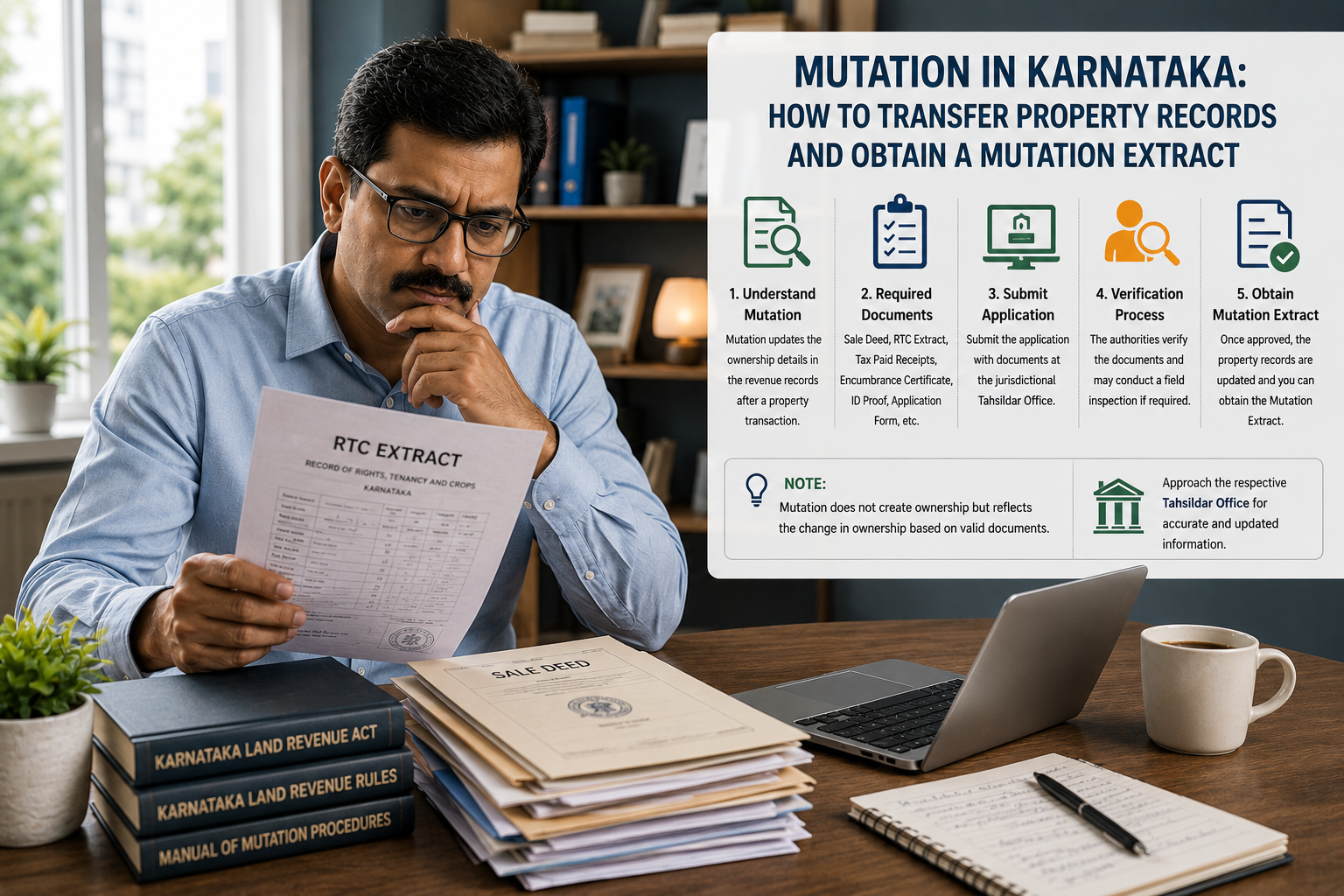
- Sale happened multiple times but mutation was never done
- Legal heir issues — siblings fighting over inherited land
Nothing dramatic at the very beginning. Just small loose ends. Some procedural lapses — partly in haste, partly out of ignorance. They accumulate over time. And years later, they surface as disputes when you try to sell or build.
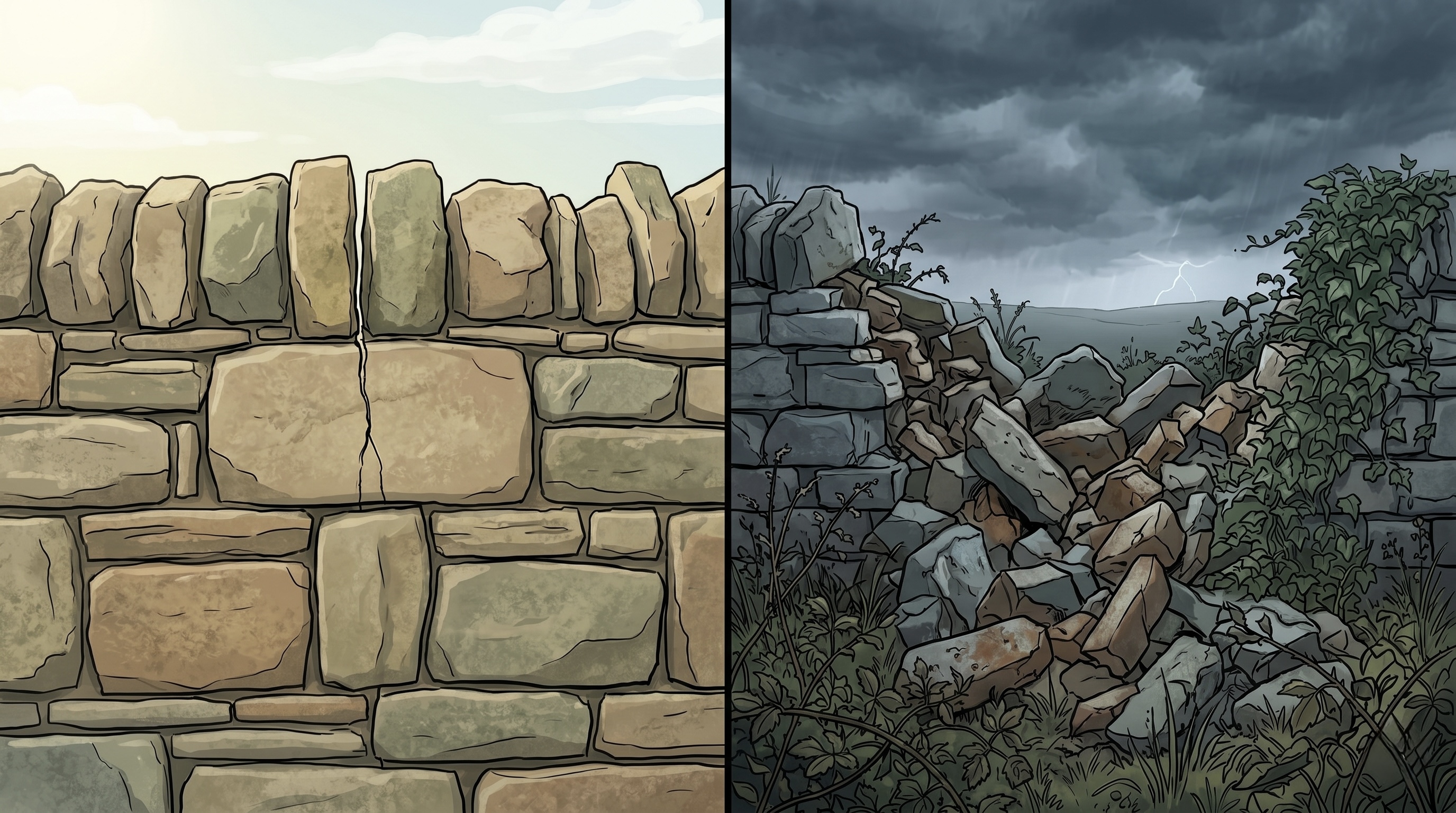
Many land disputes are like small cracks in a wall. If you don't repair them on time, the wall eventually collapses.
Land disputes are rarely inevitable. They are usually accumulated neglect. Which is why the most important thing in land ownership is not the purchase — it is what happens before and after.
Checking documents. Updating records. Verifying boundaries. Making sure paperwork matches the reality on the ground. Boring work. But necessary.
Most disputes don't begin in courtrooms. They begin in ignored documents.
Fix early. Check often.
Myth 6: Once you buy land, you are done.
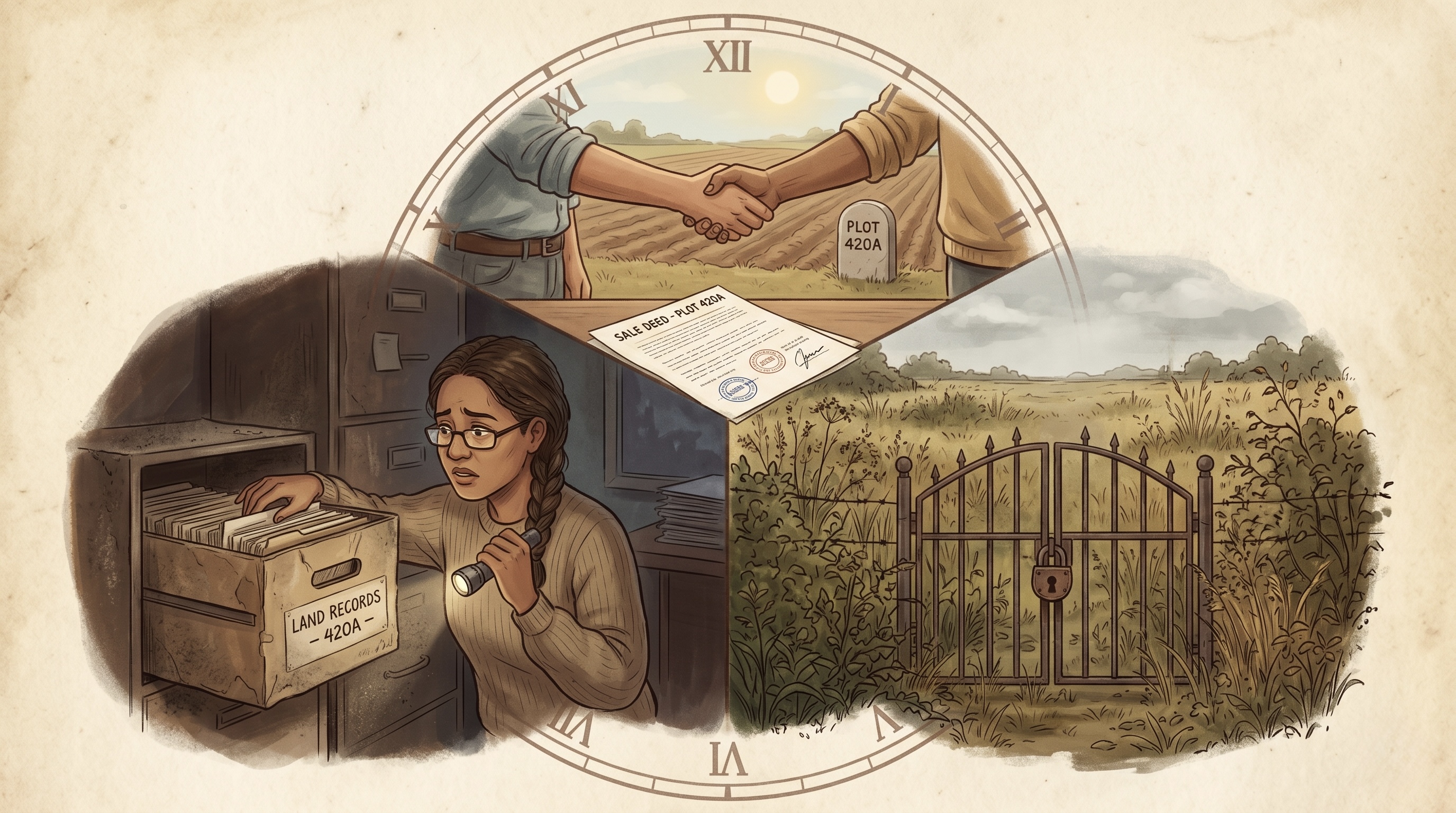
There are two ways most land stories go.
Happy and rare: you bought or inherited land, sold it a few years later with bumper returns. Most realistic: you bought or got land, slept over it, and one fine day decided to sell — only to wake up to all kinds of rude shocks and delays.
For most people, land ownership feels like a one-time event. You buy the land. Register the sale deed. Put the documents in a file. And mentally say — done.
For the next twenty years the land quietly sits somewhere in the background of life. Until one day you suddenly need it. And you open Pandora's box.
A pending mutation that was never done. A boundary that was never demarcated. A legal heir who surfaced out of nowhere. A neighbour who has been silently inching inside your land. A government land-use change you had no clue about.
That is why land is very different from other assets. Your stocks sit safely in your demat account. Your FD quietly matures in your bank account. No noise. But your land lives in the real world. Records need updating. Boundaries need verifying. New government rules need compliance.
Owning land is not a one-time transaction. It is a lifecycle.
The work required to keep land records clean is boring: checking documents, updating records, verifying boundaries, running a checklist every few years. Important work. But boring work. So most people postpone it until they absolutely have to deal with the land again — usually when they want to sell. And by then, the small loose ends have had years to grow into large problems that would have been much easier to handle early.
Buying land is only the beginning.
Myth 7: Land value is all about location.
Ask anyone what decides land value and you will hear it resoundingly: location, location, location.
No one is wrong. Location is certainly a big part of land prices. But something else quietly influences land prices — hidden from plain sight. Certainty.
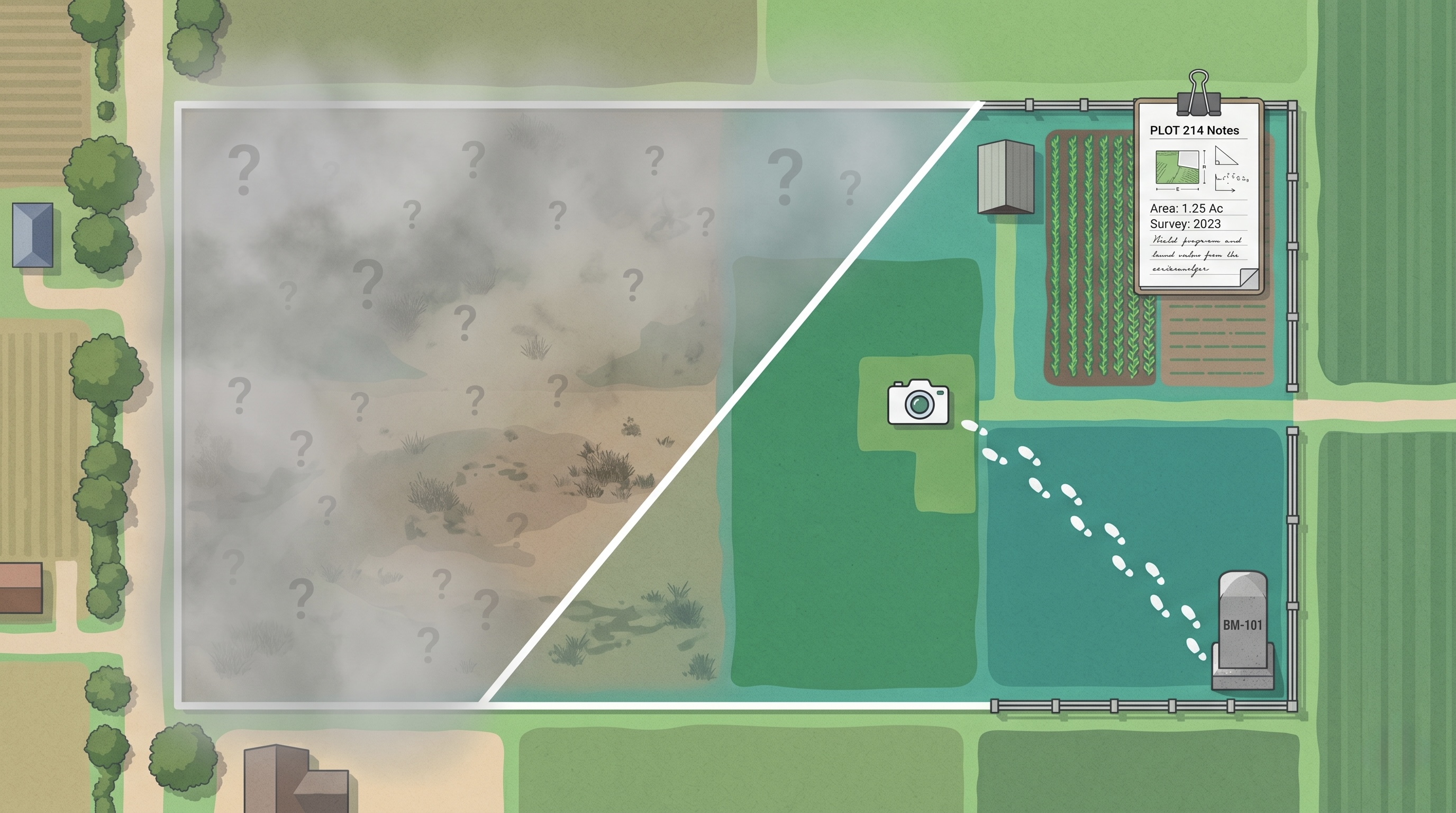
Buyers aren't afraid of the land. They are afraid of what they cannot see. Has someone encroached on this land before? Was there a structure here I should know about? Is someone cultivating it silently? Has there been a boundary dispute with the neighbour?
Anything that crops up after the purchase makes everything utterly painful. Courts. Police stations. Tehsil. Pleading. Anger. Frustration. Even if you are legally right.
While the government provides all kinds of land records — revenue records, registered records, older records — it critically misses one thing: the ground truth.
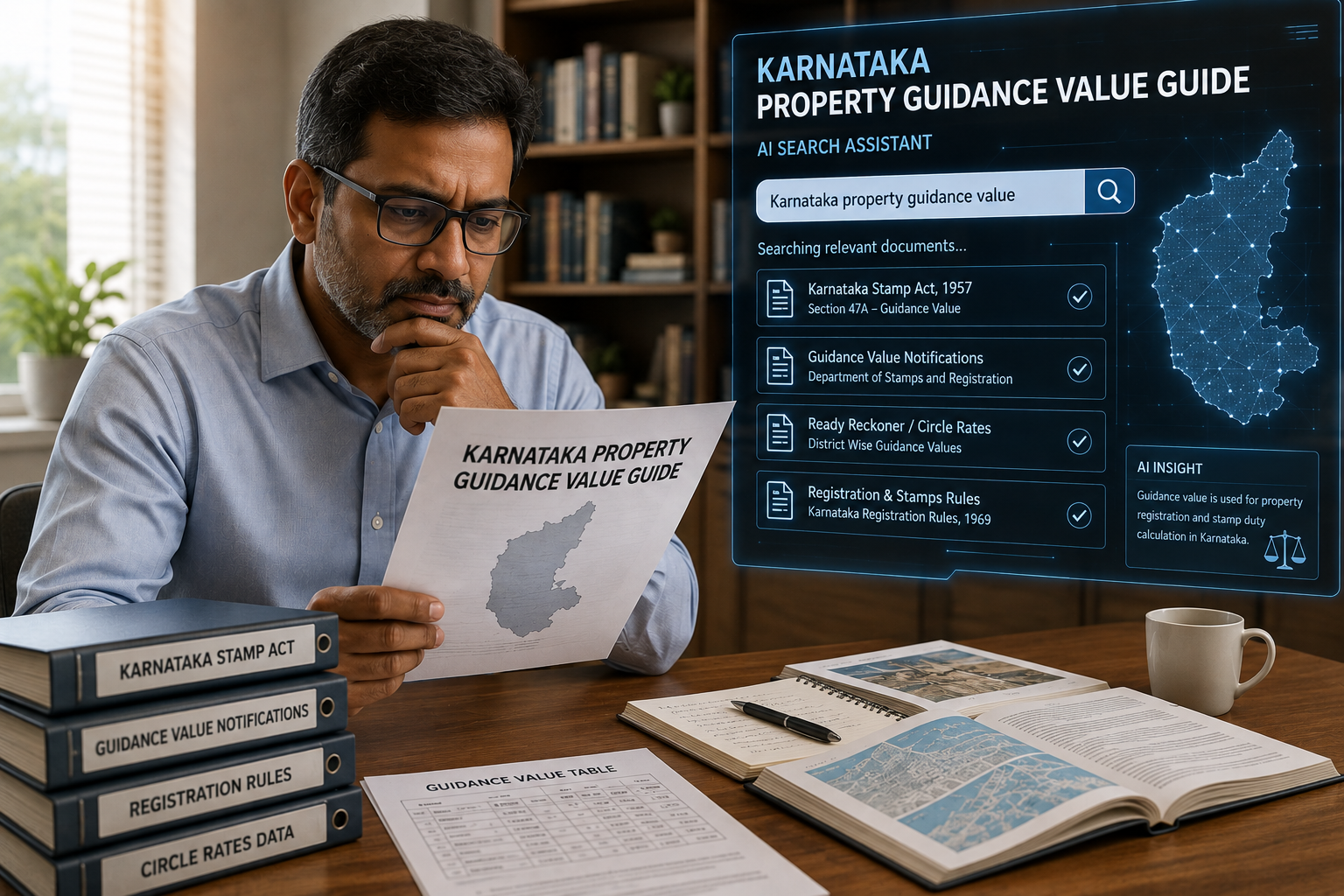
Is the land encroached now? Was it encroached in the past? Was there any structure — legal or illegal — over it before? Has the boundary changed? Government records track events: buying, selling, mortgage, partition. But they rarely capture what happens between those events. This gap creates uncertainty. Uncertainty leads to doubt and delays. Even good land offered at a discount immediately raises suspicion — "something must be wrong" — even when nothing really is.
What feels like a glaring miss in the land market is a Land Ground History Report. No opinions. Just documented ground truth. Collected periodically. By a neutral third party. Similar to the car service history report that comes in handy when selling a used car.
Most buyers would prefer land 100 meters off the main road with 10 years of ground history showing no encroachment, over land 30 meters off the main road with zero visibility into its past.
History builds confidence. Confidence builds value.
Location creates potential. Certainty creates value.
At TLB, we believe land deserves a simple Ground History Report. Periodic ground inspections. Boundary checks. Photographs and field notes. Consistent, repeat work. Because in land transactions, the biggest gap is rarely the documents — it is the ground truth.
Land problems don't come from land. They come from lack of visibility, process, and follow-through. These seven myths share a common thread: when you remove the fog, land becomes manageable. Not easy — but manageable. Just like everything else.
Want clarity and confidence about your land?
Try TLB for free and see where your land stands.
Try TLB for Free